AGENCIA
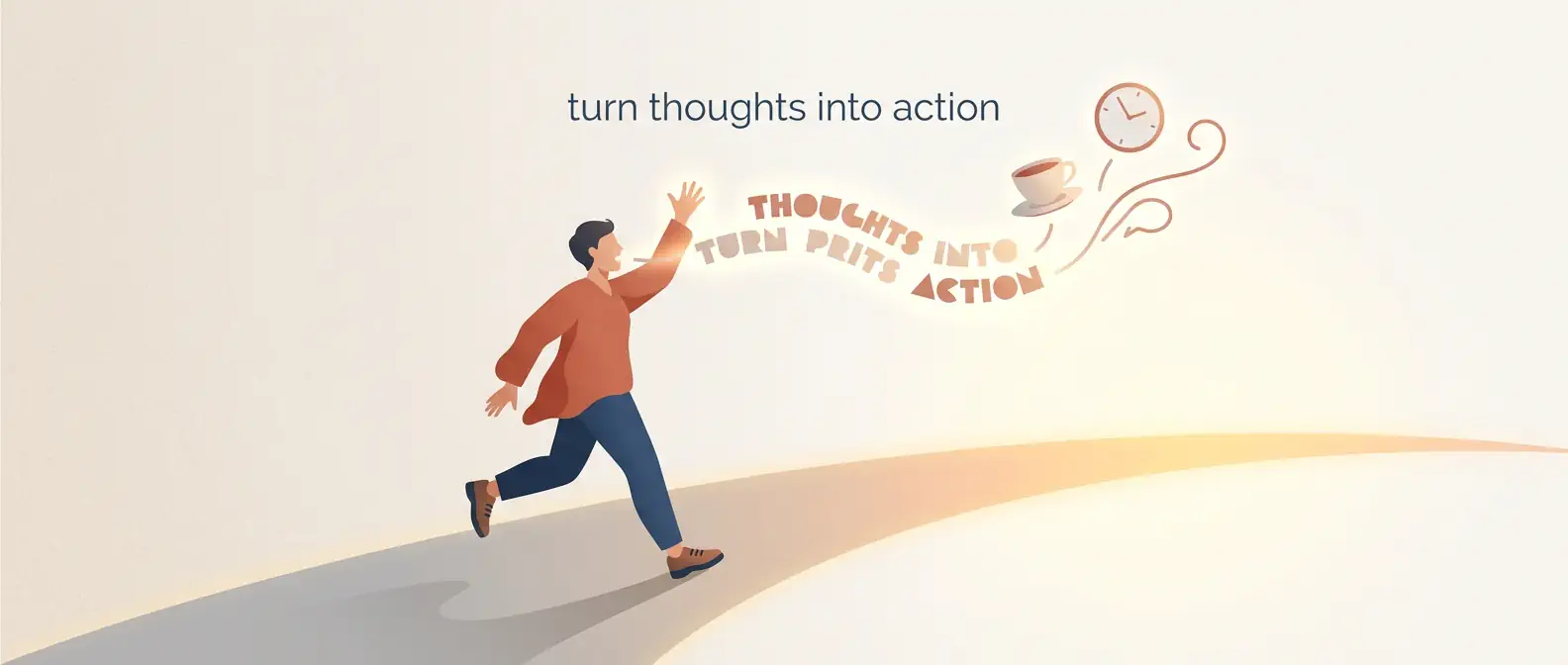
Every word you learn comes with one thing you can say out loud, today
A tool built by a language teacher to turn words into speech — and finally show you why you freeze.
You can read a menu in Spanish. you still freeze the second someone asks you a question.
You've put in real hours. Duolingo streaks, flashcard decks, maybe a grammar book gathering dust on your desk. You can read a text message from a Spanish-speaking friend without blinking. And then someone looks at you and asks "¿qué tal tu día?" — and your mind goes completely blank.
You know the words are in there. You just can't pull them out fast enough to build a sentence. And you don't even know why: is it grammar you never really learned? Is it fear? Is it that you've never once said these words out loud, only recognized them on a screen?
Months of app streaks. zero real conversations.
Here's the part that stings more: you've finished nothing. You start these apps full of motivation, hit a groove for a few weeks, and then quietly stop opening them — not because you got busy, but because something about them felt hollow. You were collecting points, not building anything you could actually use.
Meanwhile the gap between "words I know" and "things I can say" keeps widening. You add more vocabulary, and somehow you feel less able to speak, not more. That diffuse dissatisfaction isn't laziness. It's your instinct telling you the method is wrong, not you.
The problem isn't your vocabulary. it's that no one ever taught you what to do with it.
Here's the reframe, and it changes everything: you don't need more words. You need to know what to do with the ones you already have — the instant you learn them — and you need to understand what's actually happening in your head when you freeze.
Vocabulary apps hand you flashcards. They never turn a word into an action. They never ask you to notice your own thought patterns when you hit a wall. So the wall stays invisible, and invisible walls feel like personal failure instead of what they really are: a normal, fixable gap.
Even advanced speakers hit these gaps. I once froze mid-story on the french term "garde à vue" — a level of french I'd call fluent, blindsided by one precise word. That's not regression. That's a targeted gap, and once you can name it, you can route around it in the moment and come back for it later, on purpose.
This is exactly the kind of thing autonomous, curious learners are good at diagnosing — the same instincts that make you jump between physics, history, and a Spanish podcast in one afternoon are the instincts that make you excellent at noticing your own patterns. Fluency isn't built by memorizing more. It's built by immediately using each word in a way that's yours, and by understanding your own blocks — memory, culture, exposure, or just clinging too hard to how English structures a thought — so you can work around them instead of repeating them.
Learning Spanish this way stops being a task. It becomes a mirror on how you build thought itself: musically, linking sound to meaning; architecturally, structuring and inhabiting an idea; or like lego, assembling modular blocks of words and grammar into something that's unmistakably yours.
Agencia turns every word into an action — and every freeze into information
I built AGENCIA as a Spanish professor, translator, and interpreter, after years of watching capable, curious students freeze mid-sentence in my classroom — not because they lacked vocabulary, but because no one had ever shown them what to do with it, or how to notice the exact moment their mind blocks.
AGENCIA pairs every single word with something you say out loud, right now — not "recognize," say. It asks you real, personal questions about where your blocks come from. It has you write your own speaking strategies instead of following mine. And it gives you a growing, self-authored journal — "I can now..." — as proof of progress you can actually see, instead of a vague feeling of being stuck.
Your path, your voice, your cognitive connections. You choose the topics. You write the strategies. You decide what "fluent" looks like for your life.
What you get, free, right now
8 real-life topics to choose from — daily routines, emotions, food, travel, work, relationships, ideas & philosophy, culture & arts — each tagged beginner, intermediate or advanced
~20 actionable vocabulary items per topic, each one paired with something you say out loud immediately
a metacognitive reflection space — personal, situational prompts that help you locate exactly where and why you freeze
a speaking strategies section where you write your own methods, with a light example to get you started
your personal "i can now..." journal — written in your own words, in English or Spanish, revisited over time
a cross-linguistic connections section turning Spanish into a mirror for how you think, not just what you say
zero signup to start, zero download, runs entirely in your browser
lifelong free access to this first version, plus first access to the waitlist for the future, more complete paid version
one click, no signup, about 15 minutes to your first session
Why this actually works
every word comes with an action, so you leave each session having said something, not just seen it
no fixed script for reflection — the prompts adapt to your real freezes, not a generic list of "common mistakes"
you write your own speaking strategies, so what you build actually fits how your mind works
the "i can now..." journal gives you tangible proof of progress, instead of a feeling that never quite convinces you
you pick the topics — your job, your relationships, your daily routine, even philosophy — never random words you'll never use
the cross-linguistic connections section shows you why Spanish sentences feel foreign, by comparing them directly to how English works
built for non-linear minds — jump between topics and sections in any order, nothing forces a straight line
metacognitive prompts turn "i froze" from a mystery into a diagnosis: is it grammar, memory, culture, or exposure?
even advanced learners hit precise gaps — AGENCIA teaches you to route around them in the moment instead of being blindsided
no voice recording, no gamified pressure, no leaderboard — you speak on your own terms, out loud, in your own space
three ways to think about your own progress — musical, architectural, lego — so you find the metaphor that actually clicks for you
entirely free, browser-based, one click — there's no reason to keep postponing this
built by a teacher who spots this exact freeze in real students, not by an app team optimizing for streaks
Be one of the very first people to use this
AGENCIA just launched. There's no countdown, no limited spots, no artificial scarcity — because there doesn't need to be. What's true is simpler: this is a brand-new tool, and you'd be among the first humans on earth to open it.
The version you're using today is deliberately light — a first, honest prototype. A more complete paid version is coming later, and everyone who works through this prototype gets first access to the waitlist for it, ahead of everyone else.
no cost, no signup to start — just be one of the first in
What they say
“This type of exercice allows me to take a step back and fill in the gaps of basic rules and vocabulary that I had neglected in the past without making me feel that I am regressing in my learning process. In fact, it allows me to see these difficulties without complications or frustration.”
Picture this: three weeks from now
You're mid-conversation with a Spanish-speaking friend, and a question catches you off guard. Old you would have frozen — mind blank, smile frozen, changing the subject in English. New you notices the freeze happening, names it in half a second — "this is a vocabulary gap, not a fear thing" — routes around it with a phrase you do know, and keeps the conversation moving.
Later that night, you open your "i can now..." journal and add one line. It's not dramatic. It's just true. You scroll up and see twelve other lines like it, each one something you couldn't say a few weeks ago and can say now, in your own words, proof you built yourself.
You start noticing something stranger, too: thinking in Spanish is starting to change how you think in English. A sentence structure, a way of framing an idea — your mind is branching in a direction it didn't branch before. Learning a language stopped being a chore you abandon in week three. It became a mirror you actually want to keep looking into.
zero financial risk — because there's no financial anything
AGENCIA is entirely free. no card, no trial that quietly converts, no "free for 7 days" trick. you have nothing to lose by opening it right now except the fifteen minutes it takes to say your first real sentence.
no card, no catch, no signup required to begin
Agencia isn't for everyone
Join if…
✅ you've learned real Spanish vocabulary but freeze the second you need to speak it
✅ you're self-directed and want to choose your own topics, not follow a fixed curriculum
✅ you're curious about *why* you freeze, not just eager to memorize more words
✅ you want a tool you'll actually finish, with visible proof of your own progress
Do NOT join if…
❌ you want a gamified app with points, streaks and leaderboards to chase
❌ you want someone else's rigid script instead of building your own strategies
❌ you want the app to record or grade your spoken Spanish for you
❌ you're looking for a finished, polished paid product rather than a first honest prototype
I've tried apps before and quit them all. why would this be different?
because those apps handed you words to memorize, not actions to take. every single item in AGENCIA comes with something you say out loud immediately — and a reflection space that helps you understand your own blocks instead of just repeating past patterns.
do I need to already speak some Spanish to start?
no. topics are tagged beginner, intermediate and advanced, and you choose your entry point. what matters more than your level is your willingness to actually say things out loud, not just recognize them.
does the app listen to me speak or correct my pronunciation?
no — speaking happens off-app, on your own, out loud, in your own space. AGENCIA structures and guides what you say and reflect on; it doesn't record or grade your voice. this is deliberate: the goal is your own autonomy, not dependence on a correction engine.
is this really free, or is there a catch later?
this prototype is genuinely free, with lifelong access. a more complete paid version is planned for later, and finishing this version gets you first access to its waitlist — but nothing here requires a card or a signup to use today.
I learn in a non-linear way — videos, books, random conversations. will this feel like
the opposite is the point. you move freely between six sections and eight topics in any order. there's no fixed lesson sequence — you follow your own curiosity, the way you already learn everything else.
what if I hit a word or concept I just can't grasp, even with this?
that's not failure — that's data. even advanced speakers hit precise gaps. AGENCIA's reflection prompts help you name the gap, consciously route around it in the moment, and come back to close it later on purpose, instead of being blindsided by it.
no signup, no cost — just open it and say your first sentence today